

The Colonial Balconies Route in Lima is one of the most fascinating cultural experiences in the Historic Center. The wooden balconies, with their carved lattices and unique designs, are a living symbol of viceregal and republican Lima. Walking through its streets reveals centuries of history, architecture, and tradition that still breathe in every facade. Below, you’ll find a comprehensive guide with a detailed history, recommended itinerary, prices, weather, activities, hotels, cuisine, and practical tips, designed for travelers looking to make the most of their visit.
History of Lima’s Balconies
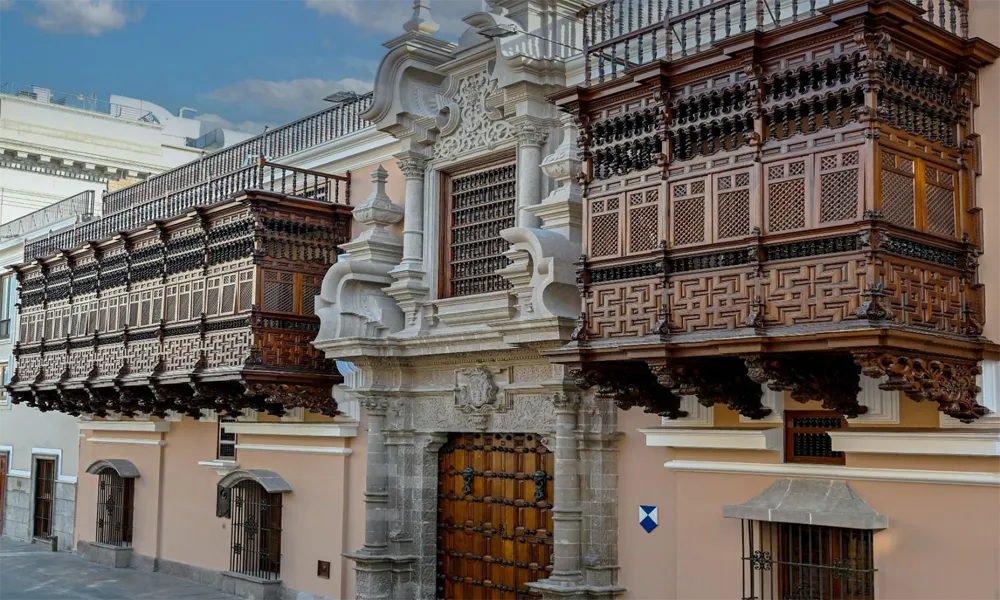
Lima’s balconies are a legacy of the Mudejar tradition brought by the Spanish in the 16th century. Their “closed box” design—inspired by Arab viewing platforms—allowed Lima families to discreetly observe urban life. Between the 17th and 19th centuries, Lima had thousands of balconies, combining Baroque, Rococo, and Neoclassical styles. Made of cedar and mahogany, they reflected the wealth of their owners and served as a symbol of social prestige.
During the Republic (19th century), balconies became an element of urban identity. Although many were lost over time, since the 1990s, restoration efforts have been undertaken under programs such as “Adopt a Balcony,” which have allowed dozens to be recovered and now grace the streets of downtown.
How to get there
- Location: Lima’s Historic Center (Plaza Mayor, Ucayali, Carabaya, Conde de Superunda, Ica, Camaná, and adjacent areas).
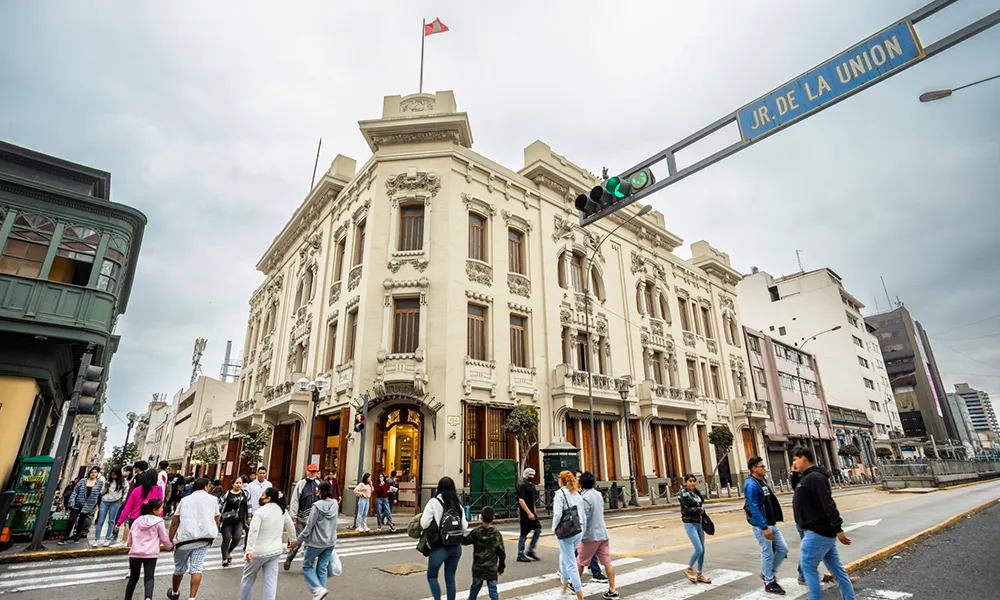
- From Miraflores or Barranco: Take the Metropolitano to the Colmena or Jirón de la Unión stations, with a fare of S/3 to S/4.
- By taxi or app: Direct transportation from Miraflores costs an average of S/20 to S/30 depending on traffic.
- On foot: Once in the Plaza Mayor, the entire route is covered on foot.
Climate and Best Time to Visit
Lima has a coastal desert climate:
- Summer (December–March): Sunny days, average temperature of 26°C to 30°C. Ideal for walking and photography.
- Winter (June–September): Gray skies with drizzle, temperatures between 14°C and 18°C. Perfect for a cultural visit with a light coat.
- Recommended season: All year round, although in summer the balconies look better with natural light.
Suggested itinerary (3 to 4 hours on foot)
1. Plaza Mayor of Lima
Starting point. From here you can see the Archbishop’s Palace, with its two enormous carved wooden balconies, considered the most representative of the neocolonial style.
2. Casa de Aliaga
Built in 1535, it is the oldest house in Lima inhabited by the same family since the city’s founding. Its balcony, interior courtyards, and colonial halls transport you to another era.
- Admission: Around S/35 per person, includes a guided tour upon reservation.
- Hours: Monday to Saturday, 10:00 a.m. to 4:00 p.m.
3. Torre Tagle Palace
Located at Jr. Ucayali 363, this is the ultimate symbol of Lima’s balconies. Built in 1735, it boasts two Moorish balconies of finely carved wood. It was once the residence of the aristocracy and today houses the Foreign Ministry.
- Exterior: Free.
- Interior: Only on special and guided tours (depending on cultural programming).
4. Osambela–Oquendo House
On Jr. Conde de Superunda 298. Built between 1803 and 1805, it stands out for its façade with five aligned balconies and an octagonal viewing platform from which ships arriving in Callao could be observed.
- Exterior visits: free.
- Cultural events: according to schedule, admission from S/10.
5. Riva-Agüero House
On Jr. Ica 426. Built in the 18th century, it features finely finished box balconies. It currently belongs to the Riva-Agüero Institute (PUCP) and occasionally hosts cultural visits.
Admission: Limited access for academic or cultural activities.
6. Jirones Walk
Walking along Jirones Carabaya, Ica, and Camaná streets reveals continuous and corner balconies, some Republican with open railings and others closed Viceregal, forming a unique architectural corridor.
Uniform prices (reference prices)
- Casa de Aliaga: S/35
- Archbishop’s Palace Museum + Cathedral: between S/10 and S/20
- Casa de Osambela–Oquendo: free entry outside; approximately S/10 for cultural activities
- Tagle Tower: free outside
- Full guided tour: between S/80 and S/120 per person with a specialized guide
Recommended activities
- Photography tour: ideal for capturing the lattices, corbels, and ornate decorations.
- Historical guided tour: understand the social and religious symbolism of each mansion.
- Nearby museums: Lima Cathedral, Central Reserve Bank Museum, Museum of Religious Art.
- Local cuisine: combine the tour with lunch at Bar Cordano (founded in 1905), famous for its sandwiches and Creole dishes.
Recommended Hotels
- Sheraton Lima Historic Center: A 5-star hotel near the city center, ideal for combining comfort and proximity.
- Gran Hotel Bolívar: Located in Plaza San Martín, historic and with classic-style rooms.
- Hospedaje Santa Rosa: A budget-friendly option just steps from the Plaza Mayor.
Unmissable Cuisine on the Route
- Bar Cordano: Serves local ham sandwiches, lomo saltado, cau cau, and traditional pisco sour.
- El Chinito: Known for its pork rind sandwich with sweet potato and salsa criolla.
- Colonial Cafes: Located in nearby neighborhoods, perfect for relaxing after your hike.
Practical Tips
- Best time: Morning (9:00 a.m. to 12:00 p.m.) or afternoon (3:00 p.m. to 6:00 p.m.).
- Clothing: Light clothing in summer; a coat and small umbrella in winter.
- Safety: Walk on main streets, avoid displaying valuables, and use app-based taxis at night.
- Duration: 3 to 4 hours on foot, with breaks for photos and museum visits.